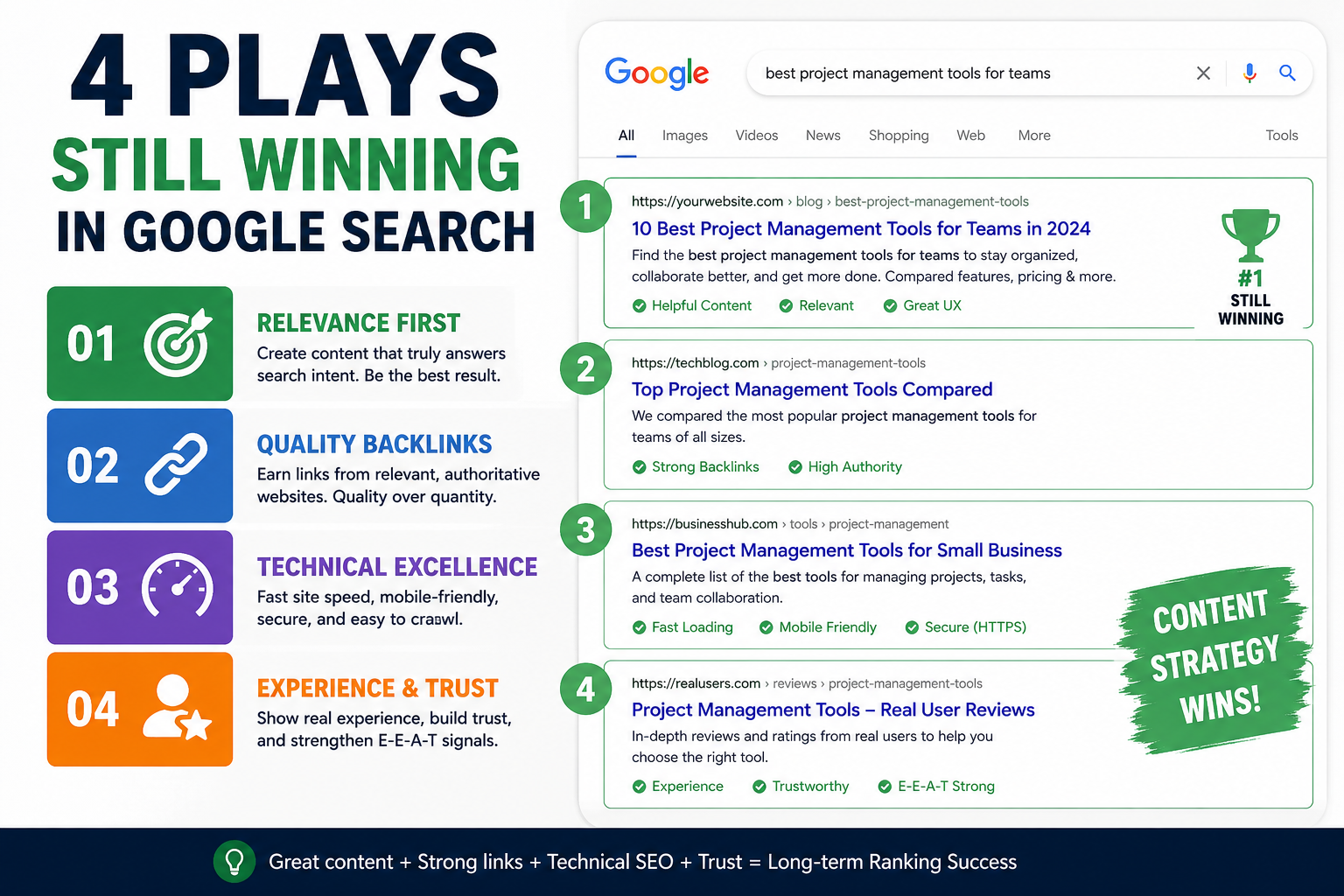
SaaS Brand Link Building: A Practical SEO & AI Search Guide
Building a SaaS product is only half the challenge.
Your potential customers also need to discover your brand, trust your expertise, compare your product with alternatives, and find enough evidence to choose you.
That is where SaaS brand link building becomes valuable.
Modern SaaS link building is not simply about acquiring as many backlinks as possible. A stronger approach combines relevant backlinks, editorial mentions, digital PR, useful resources, partnerships, product listings, original research, and content that other websites genuinely want to reference.
This matters because SaaS buyers often research a product across multiple websites before making a decision. At the same time, search behavior increasingly includes AI-powered search and answer engines, where brand mentions and authoritative third-party sources can influence how a company is discovered and described. Recent SaaS SEO research also emphasizes contextual relevance and brand visibility rather than relying only on domain-level metrics.
What Is SaaS Brand Link Building?
SaaS brand link building is the process of earning relevant backlinks, editorial mentions, citations, and online references for a software brand to improve its authority, search visibility, referral traffic, and discoverability.
The important word is relevant.
A backlink from a website that covers SaaS, technology, marketing, business software, or your specific industry can provide a much stronger contextual signal than a random link from an unrelated website.
For example, imagine you operate a SaaS platform for sales teams.
A contextual mention from an established sales technology publication is highly relevant.
A random backlink from an unrelated website with no connection to sales, software, or business may provide little meaningful value.
Therefore, a successful SaaS link building campaign should ask:
"Does this mention help our audience discover, understand, trust, or evaluate our product?"
If the answer is yes, the opportunity is worth investigating.
Why Does SaaS Link Building Matter?
SaaS markets are often extremely competitive.
You may be competing against established software companies that have spent years publishing content, earning media coverage, developing partnerships, and building strong digital brands.
Publishing another blog post is not always enough to close that authority gap.
A strategic link building campaign can help your SaaS website:
- Increase qualified organic visibility
- Strengthen topical authority
- Earn referral traffic
- Build brand credibility
- Support important commercial pages
- Increase exposure in industry publications
- Generate valuable brand mentions
- Improve discoverability during software research
- Create relationships with publishers and industry websites
- Support visibility across traditional and AI-powered search
The goal should not be "more backlinks."
The better goal is:
More relevant authority around the pages and topics that matter to your business.
What Makes a Good SaaS Backlink?
Not every backlink has the same practical value.
Before pursuing an opportunity, evaluate the website and the actual placement.
1. Topical Relevance
The website should ideally operate within your industry or a closely related subject.
For example:
Strong relevance:
SaaS → CRM → sales → lead generation → B2B marketing
Weak relevance:
SaaS → unrelated celebrity news → random entertainment website
Relevance should be one of the first filters in your prospecting process.
2. Real Audience
Look beyond SEO metrics.
Ask:
Does the website receive real organic traffic?
Does it publish consistently?
Does its content attract engagement?
Is the audience relevant to your product?
Would a potential customer actually read the page?
A website can have impressive third-party metrics but very little real audience value.
3. Editorial Context
A natural contextual mention is usually more useful than a link placed in an obviously promotional section.
The surrounding content should make sense.
For example:
Businesses using sales automation software can reduce repetitive manual tasks.
A contextual link to a relevant SaaS resource can naturally support this statement.
4. Page-Level Relevance
Don't evaluate only the domain.
Evaluate the specific page where your brand will appear.
A relevant article with real traffic and a suitable audience can be more useful than a high-metric domain where your link is buried on an unrelated page.
5. Brand Context
Your goal should be to create a consistent digital footprint.
Your company should appear naturally alongside:
Your category
Your product
Your customers' problems
Your solutions
Your competitors
Industry terminology
Related technologies
Relevant experts and publications
This helps create a clearer entity and topical association around your brand.
7 SaaS Brand Link Building Strategies That Actually Make Sense
1. Create Link-Worthy SaaS Content
The easiest way to earn relevant links is to publish something worth referencing.
Instead of producing another generic 1,500-word article, create assets that provide original value.
Examples include:
- Original industry research
- SaaS benchmarks
- Survey results
- Industry statistics
- Interactive tools
- Calculators
- Templates
- Free resources
- Original datasets
- Detailed case studies
- Comparison guides
- Technical documentation
- Industry reports
For example, a project-management SaaS company could publish:
"2026 State of Remote Project Management Report"
If the research contains useful statistics, bloggers, journalists, consultants, and other SaaS companies have a reason to reference it.
That creates a much stronger link acquisition opportunity than simply asking websites to link to a standard product page.
2. Use Digital PR to Earn Authority
Digital PR is particularly useful for SaaS companies because software businesses can often generate proprietary data.
Your product may have access to useful information about:
- User behavior
- Industry trends
- Software adoption
- Search trends
- Productivity
- Customer preferences
- Business operations
- Technology usage
Turn that information into a story.
For example:
Weak pitch:
"Please publish an article about our SaaS product."
Stronger pitch:
"Our analysis of 50,000 anonymized workflow records found that teams using X workflow reduced Y type of delay by Z%."
The second approach gives journalists and publishers something useful to discuss.
Digital PR can therefore generate both links and brand mentions, which makes it particularly interesting for modern search visibility.
3. Build Strategic SaaS Partnerships
Your integration ecosystem can become a valuable link building channel.
If your SaaS integrates with:
- CRM platforms
- Payment platforms
- Analytics tools
- Email platforms
- Project management software
- Communication tools
- Automation platforms
look for legitimate partnership opportunities.
Potential assets include:
- Integration pages
- Partner directories
- App marketplaces
- Customer stories
- Joint webinars
- Co-created research
- Integration tutorials
- Partner case studies
These links can be especially valuable because they are connected to real business relationships.
4. Earn Relevant Guest Contributions
Guest posting can be particularly useful when you contribute genuine expertise to relevant industry publications. For a practical guide to creating and evaluating guest-post opportunities, see our Guest Posting for SEO guide.
Guest posting can still be useful when the objective is expert contribution and audience value, rather than publishing low-quality articles simply to obtain a backlink.
Look for websites that:
- Have a genuine audience
- Publish relevant content
- Have editorial standards
- Cover your industry
- Publish useful expert content
- Are not overloaded with unrelated sponsored posts
Instead of writing generic content, contribute something that demonstrates expertise.
For example:
Generic topic:
"10 Benefits of SaaS"
Better topic:
"How SaaS Teams Can Build a Scalable Customer Onboarding Workflow"
The second topic addresses a real problem and gives you a natural opportunity to demonstrate expertise.
5. Target Comparison and Listicle Pages
SaaS buyers frequently compare products before purchasing.
That makes pages such as:
- Best CRM software
- Best project management tools
- X alternatives
- X vs Y
- Best marketing automation platforms
- Software comparison guides
important parts of the SaaS buyer journey.
Your objective should not be to manipulate these pages.
Instead, identify legitimate opportunities where your product genuinely solves the problem being discussed.
Modern SaaS link building strategies increasingly pay attention to comparison pages, reviews, listicles, integrations, and other pages that influence software discovery.
6. Reclaim Unlinked Brand Mentions
Someone may already mention your company without linking to your website.
This is a straightforward opportunity.
Search for:
"Your Brand Name"
Then identify pages where:
- Your company is mentioned
- Your product is discussed
- Your research is referenced
- Your founder is quoted
- Your data is used
- Your product is reviewed
If the mention is relevant and a link would genuinely help readers, contact the publisher.
A simple request can be enough:
"Thanks for mentioning [Brand]. We noticed the article references our research. Would you consider linking the brand mention to the original resource so readers can access the full study?"
This is usually much easier than convincing a completely new website to mention your company.
7. Build Brand Mentions for AI Search
SaaS SEO is no longer only about traditional blue-link rankings.
Potential customers increasingly ask AI systems questions such as:
- "What are the best CRM tools for startups?"
- "Which SEO software is best for agencies?"
- "What are good alternatives to [competitor]?"
- "Which project management tools integrate with Slack?"
- "What SaaS tools are best for remote teams?"
This creates another reason to build a strong third-party presence.
Your brand should be discussed consistently across credible sources covering your category.
That means your strategy should consider:
Backlinks + brand mentions + citations + reviews + comparisons + industry references.
The objective is to make your company easier for both people and search systems to understand.
Current SaaS SEO discussions increasingly describe this as moving beyond raw link acquisition toward broader brand coverage and mentions across the web.
Where Should SaaS Backlinks Point?
This is an important question.
Many companies send every backlink to their homepage.
That isn't always the best approach.
Consider building authority toward a mixture of:
Commercial pages
- Product pages
- Service pages
- Pricing pages
- Feature pages
- Integration pages
High-value informational pages
- Original research
- Industry reports
- Comprehensive guides
- Free tools
- Templates
- Case studies
Comparison pages
- Competitor alternatives
- Product comparisons
- Category pages
The right destination depends on the purpose of the backlink.
For example, if an article discusses email automation, a relevant email automation feature page may be more useful to readers than your homepage.
Recent SaaS link-building guidance also recommends thinking carefully about the pages that support conversions rather than sending every link toward blog content.
How to Measure SaaS Link Building Success
Don't judge a campaign only by the number of links acquired.
Track a broader set of business and SEO indicators.
SEO Metrics
Monitor:
- Organic impressions
- Organic clicks
- Keyword visibility
- Ranking changes
- Referring domains
- New backlinks
- Lost backlinks
- Target-page rankings
- Non-brand organic traffic
Business Metrics
More importantly, monitor:
- Demo requests
- Free trials
- Signups
- Qualified leads
- Pipeline generated
- Assisted conversions
- Referral traffic
- Revenue influenced by organic search
Brand & AI Visibility
You can also monitor:
- Brand mentions
- Product mentions
- Industry citations
- Comparison-page presence
- Review coverage
- AI search visibility
- Whether your brand appears for relevant recommendation queries
This creates a more complete picture of whether your link building investment is actually helping the business.
A Simple SaaS Link Building Workflow
If you're starting from zero, use this framework.
Step 1: Define Your Audience
Identify:
- Who buys your software?
- What problems do they have?
- What publications do they read?
- What tools do they already use?
- What searches do they perform before purchasing?
Step 2: Identify Your Money Pages
Choose the pages that support your business goals.
Examples:
- Product
- Feature
- Pricing
- Comparison
- Integration
- Solution
Step 3: Create Linkable Assets
Develop something worth referencing.
Examples:
- Research
- Data
- Tool
- Guide
- Template
- Report
- Case study
Step 4: Build a Relevant Prospect List
Prioritize:
Relevance → audience → editorial quality → traffic → authority metrics
Don't reverse this order.
Step 5: Personalize Outreach
Explain why the resource is relevant to their audience.
Avoid mass-produced emails.
Step 6: Track Every Placement
Maintain a spreadsheet containing:
- Website
- URL
- Topic
- Target page
- Anchor/context
- Link type
- Traffic
- Relevance
- Publication date
- Status
Step 7: Measure Business Outcomes
Review the campaign monthly.
Ask:
Are these links helping us reach the right audience and move valuable pages forward?
If not, change the strategy instead of simply increasing link volume.
SaaS Link Building Mistakes to Avoid
Buying Links Without Evaluating Relevance
A high domain metric does not automatically mean a good opportunity.
Chasing Quantity
100 irrelevant links are not necessarily better than 10 highly relevant editorial mentions.
Using the Same Anchor Text Everywhere
A natural backlink profile should not look mechanically constructed.
Linking Only to the Homepage
Important product, research, comparison, and resource pages may also deserve authority.
Publishing Generic Guest Posts
If the article provides little value to the publisher's audience, it probably isn't a strong long-term strategy.
Ignoring Brand Mentions
A company can gain valuable visibility from being discussed even when every mention doesn't produce the exact backlink you wanted.
Measuring Only DR or DA
Third-party authority metrics are useful for prospecting, but they shouldn't be your only decision-making criteria.
SaaS Brand Link Building: The Practical Framework
A simple way to remember the strategy is:
Create → Earn → Mention → Connect → Measure
Create
Build content, research, tools, data, and resources people want to reference.
Earn
Secure relevant editorial backlinks through outreach, PR, partnerships, and useful contributions.
Mention
Increase your brand's presence in industry articles, reviews, comparisons, discussions, and publications.
Connect
Develop relationships with publishers, SaaS companies, experts, journalists, and complementary businesses.
Measure
Track SEO visibility, referral traffic, conversions, brand mentions, and AI search visibility.
This is more sustainable than treating link building as a race to acquire the largest number of backlinks.
SaaS Brand Link Building Framework
Final Takeaway
SaaS brand link building is not about collecting links. It is about building authority around your brand, your expertise, and the pages that matter to your customers.
The strongest strategy combines relevant editorial backlinks with digital PR, original research, useful resources, partnerships, comparison visibility, brand mentions, and genuinely helpful content.
For a SaaS company starting its SEO journey, the best place to begin is simple:
- Understand your target customer.
- Identify the pages that drive business value.
- Create resources worth referencing.
- Build relationships with relevant publishers and businesses.
- Earn contextual links and brand mentions.
- Track rankings, traffic, leads, and brand visibility.
- Improve the strategy based on actual results.
The objective isn't to make your backlink count look impressive.
The objective is to make your SaaS brand more discoverable, more credible, and easier for both customers and search systems to understand.
Frequently Asked Questions About SaaS Brand Link Building
What is SaaS brand link building?
SaaS brand link building is the process of earning relevant backlinks, editorial mentions, citations, and online references for a software company to improve organic visibility, authority, referral traffic, and brand discoverability.
How is SaaS link building different from normal link building?
SaaS link building often focuses on software-specific opportunities such as integration partnerships, product directories, comparison pages, original product data, industry research, software reviews, digital PR, and technology publications.
How many backlinks does a SaaS company need?
There is no universal number. The right target depends on your market, competitors, existing authority, content quality, and the difficulty of the keywords you want to rank for. Quality, relevance, and business impact are more useful goals than an arbitrary backlink count.
Are guest posts still useful for SaaS SEO?
Yes, when they provide genuine editorial value and appear on relevant websites with a real audience. Guest posting should not be treated as a method for producing large volumes of low-quality links.
Should SaaS backlinks point to the homepage?
Not always. Backlinks can also point to product pages, feature pages, comparison pages, integrations, research, tools, guides, and other useful resources. The destination should match the context of the referring article.
What is the best SaaS link building strategy?
There is no single strategy that works for every SaaS business. A strong program usually combines link-worthy content, original research, digital PR, partnerships, relevant guest contributions, brand mention reclamation, comparison-page visibility, and targeted outreach.
Does brand mention matter for SaaS SEO?
Yes. Brand mentions can help establish your company's presence and association with relevant topics. They can also contribute to broader brand visibility across search and AI-powered discovery systems.
How can SaaS companies get backlinks without guest posting?
SaaS companies can earn links through original research, digital PR, free tools, statistics, industry reports, integration partnerships, product directories, useful templates, case studies, linkable resources, unlinked mention reclamation, and genuine industry collaborations.
How do I know if a SaaS backlink is valuable?
Evaluate topical relevance, page quality, audience, organic visibility, editorial context, placement, referral potential, and the relationship between the linking page and your target page. Don't rely on DA or DR alone.
Can SaaS link building improve AI search visibility?
It can contribute to a broader online authority strategy. AI search systems use information from websites and other sources to understand brands, products, categories, and recommendations. Building credible third-party coverage, relevant mentions, citations, reviews, and authoritative resources can therefore support AI-search discoverability.
How long does SaaS link building take to show results?
There is no fixed timeline. Results depend on the competitiveness of your market, the strength of your existing website, the quality of acquired links, content quality, crawl/indexing, and the pages being supported. Link building should generally be viewed as a compounding SEO and brand-authority investment rather than an instant traffic tactic.